Faiz Ahmad Faiz
Poet of Revolution and Love
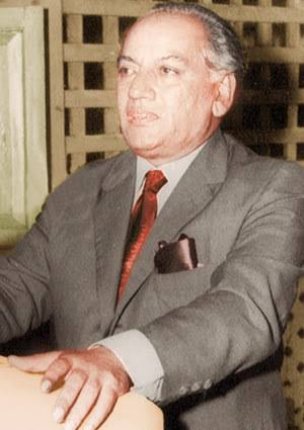 Faiz Ahmad Faiz
Faiz Ahmad Faiz is one of the most celebrated poets in the South Asia, who showed a unique combination of love, revolt, and social issues of society in his poetry.
Some poets are admired for their pleasing words, sounds and deep meaning, but some go beyond the boundaries to use poetry to pierce the hearts, to awake the slumber and to instill the strength to revolt through strong words.
Faiz Ahmad Faiz belongs to the second group.
More than forty years after his death, his verses still turn up in concerts, classrooms, social media posts, and political rallies across South Asia and beyond.
Faiz Ahmad Faiz's Birth and Early Family Life
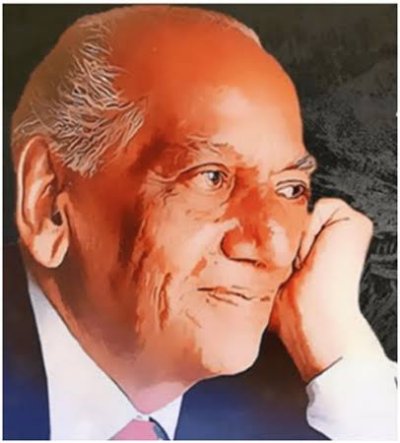
Faiz Ahmad Faiz was born on 13 February 1911 in Kala Qader, a village near Sialkot in Punjab, then part of British India. The village is now in Pakistan and is often called Faiz Nagar in his honor.
A Family of Books and Ambition
Faiz came from a well-educated family. His father, Sultan Muhammad Khan, was a barrister who had worked in the service of the Afghan ruler before settling in Sialkot and building a legal career. His mother, Sultan Fatima, ran a household where learning was valued.
The family's comfort did not last long. His father died when Faiz was still a small child, and the family's finances suffered.
Probably, it also contributed as one of the reasons that Faiz felt such deep sympathy for the poor and powerless later in life.
Faiz Ahmad Faiz: Education And The First Steps Into Poetry
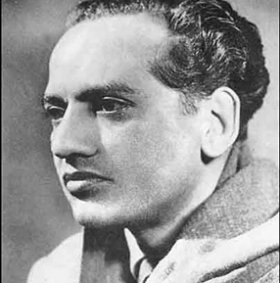 Faiz Ahmad Faiz - as a young man
Early Schooling in Sialkot
Faiz Ahmad Faiz began with religious learning. He studied the Quran and learned Arabic and Persian, which gave him a rich foundation in classical literature.
He then attended the Scotch Mission High School in Sialkot and went on to Murray College in the same city.
A Teacher Who Shaped a Poet
At Murray College, Faiz was influenced by his teacher Syed Mir Hasan, a respected scholar who had also taught the poet Allama Iqbal. Teachers like him helped Faiz see poetry as a serious craft and not just a pastime.
University Years in Lahore
Faiz moved to Lahore for higher studies. He earned a master's degree in English literature from Government College Lahore and another master's degree in Arabic from the Oriental College.
This mix of Eastern and Western literary training shows in his work. His poems carry the sweetness of classical Urdu and Persian verse, but also fresh imagery and a modern social conscience.
How Did Faiz Ahmad Faiz Begin Writing Poetry?
Faiz was exposed to poetry early, through the mushairas (poetry gatherings) that were a regular feature of Sialkot life. He began writing verse as a young man and found his voice in the 1930s, a restless period of social and political change.
He was drawn to the Progressive Writers' Movement, which believed literature should speak to the struggles of ordinary people.
He became one of its leading voices, yet he never lost the gentle, romantic touch that made his poetry so loved.
Faiz Ahmad Faiz's Career Before and After Partition
Teacher, Soldier, Editor
After university, Faiz Ahmad Faiz worked as a lecturer, first in Amritsar and later at Hailey College of Commerce in Lahore.
During the Second World War he joined the British Indian Army and rose to the rank of Lieutenant Colonel. He left the army in 1947, the year of Partition.
After Partition he became editor of The Pakistan Times, an English-language newspaper, and was also associated with the Urdu paper Imroz.
His journalism was as principled as his poetry, and it did not always please those in power.
Faiz Ahmad Faiz's marriage, family and children
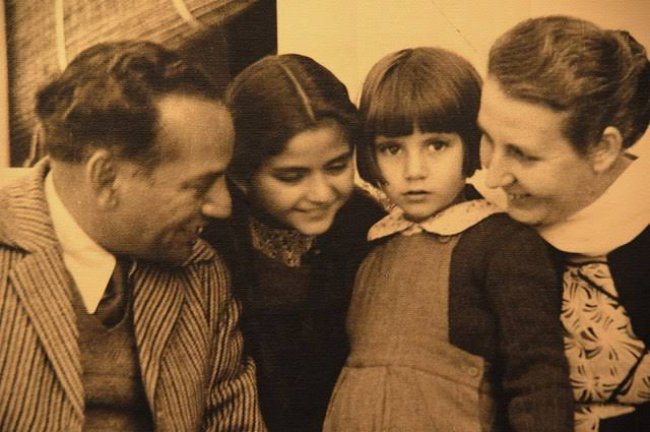 Faiz Ahmad Faiz Family - Alys, Salima & Moneeza
A Cross-Cultural Love Story
In 1941, at age 30, Faiz Ahmad Faiz married Alys George, a British woman who had come to India and moved in the same progressive circles as Faiz.
Their wedding took place in Srinagar, and the ceremony was reportedly conducted by the Kashmiri leader Sheikh Abdullah.
Alys later took the name Alys Faiz and became a devoted partner, a writer, and a steady support through the family's hardest years, including his imprisonment.
Their Two Daughters
Faiz Ahmad Faiz and Alys had two daughters:
Salima Hashmi, born in 1942, is a well-known painter, art teacher, and cultural voice in Pakistan.
Moneeza Hashmi, born in 1946, built a long career in broadcasting and television production.
Both daughters grew up in a home filled with poetry, politics, art, and conversation, and both have worked to keep their father's memory alive.
Faiz Ahmad Faiz's famous poetry works
Faiz Ahmad Faiz's poetry collections are the heart of his reputation.
Here are the major ones, with approximate publication years:
Naqsh-e-Faryadi (1941): his first collection, mixing romantic longing with early social awareness.
Dast-e-Saba (1952): poems written largely during his imprisonment.
Zindan Nama (1956): "Prison Chronicle," also shaped by his time behind bars.
Dast-e-Tah-e-Sang (1965): reflections on struggle, resilience, and hope.
Sar-e-Wadi-e-Sina (1971): a collection that continued his themes of conscience and change.
Shaam-e-Shehr-e-Yaaran (1978): poems of friendship, memory, and loss.
Mere Dil Mere Musafir (1981): written during his years in exile.
Nuskha Ha-e-Wafa (1984): a collected volume of his poetry.
Beyond verse, Faiz also wrote prose, including essays and cultural criticism, such as Meezan and Mata-e-Lauh-o-Qalam.
He wrote letters, worked as a translator and editor, and was involved in film and the arts.
His writing also contributed to the Pakistani film Jago Hua Savera (1959).
Faiz Ahmad Faiz's Poetry Excerpts That Are Still alive
Translations may never fully capture the music of Urdu, but here are a few well-known lines, quoted briefly with plain English renderings.
On Speaking Up
From "Bol" (Speak):
"Bol ke lab azaad hain tere"
Meaning: Speak, for your lips are free.
These words have become an anthem for free expression.
Faiz Ahmad Faiz reminds us that our voice is our own, and that time to use it is short.
On Faith in Justice
From "Hum Dekhenge" (We Shall See):
"Hum dekhenge, lazim hai ke hum bhi dekhenge"
Meaning: We shall see; it is certain that we too shall see.
The poem imagines a day when the powerful fall and the voiceless are heard.
It became hugely popular, especially after the singer Iqbal Bano performed it in Lahore in the 1980s during a period of military rule.
On Disappointed Dreams
From "Subh-e-Azadi" (The Dawn of Freedom):
"Yeh daagh daagh ujala, yeh shab-gazida sehar"
Meaning: This stained light, this night-bitten dawn.
Written around Partition, this poem expresses the pain of a freedom that arrived with violence and left many hopes unfulfilled.
On Love and the World's Other Sorrows
From "Mujh se pehli si mohabbat mere mehboob na maang":
"Aur bhi dukh hain zamane mein mohabbat ke siwa"
Meaning: There are other sorrows in the world besides the sorrow of love.
In this famous nazm, Faiz Ahmad Faiz turns from private romance to the suffering of the wider world.
The poem was later sung by the legendary Noor Jehan and remains one of his best-loved works.
Faiz's Difficult Times And Challenges
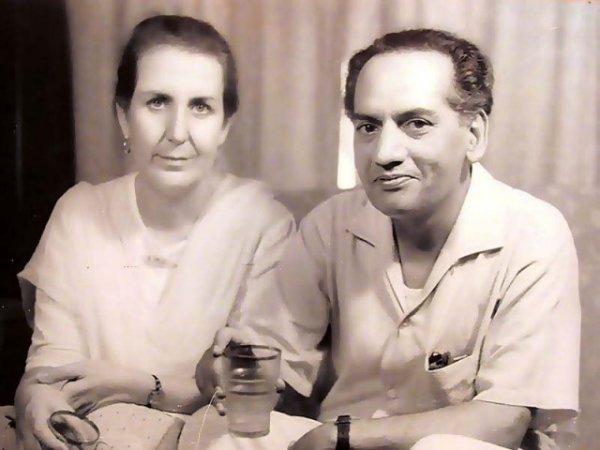 Faiz Ahmad Faiz & Alys Faiz
The Rawalpindi Conspiracy Case
The hardest chapter of Faiz Ahmad Faiz's life began in March 1951.
He was arrested and accused of involvement in the Rawalpindi Conspiracy Case, an alleged plot to overthrow the government. He spent about four years in prison, in several jails, before his release in 1955.
Prison was harsh, but it was also deeply creative.
Many of his most moving verses, including poems in Dast-e-Saba and Zindan Nama, were shaped in this period. He wrote about cells, chains, separation from loved ones, and the stubborn hope that kept him going.
Later Pressures and Exile
Faiz continued to face political pressure under later governments.
In the late 1970s, during the rule of General Zia-ul-Haq, he left Pakistan and spent several years abroad, largely in Beirut, where he edited the Afro-Asian writers' journal Lotus.
The war in Lebanon eventually forced him to move again. He returned to Pakistan in the early 1980s.
Through all this, Faiz Ahmad Faiz was away from home, under watch, and often short of money.
Yet he never gave up writing, and he never became bitter in his poetry.
Awards And Honors
Faiz Ahmad Faiz's work was recognized both at home and internationally. His major honors include:
Lenin Peace Prize (1962): awarded by the Soviet Union and presented in the following year. This was one of the biggest international honors of his life.
Lotus Prize for Literature (1976): awarded by the Afro-Asian Writers' Association.
Nishan-e-Imtiaz (1990): Pakistan's highest civilian award, given after his death.
Beyond formal awards, the greatest honor may be the affection of readers who know his verses by heart.
Faiz ahmad Faiz's Death and Surviving Family At the Time
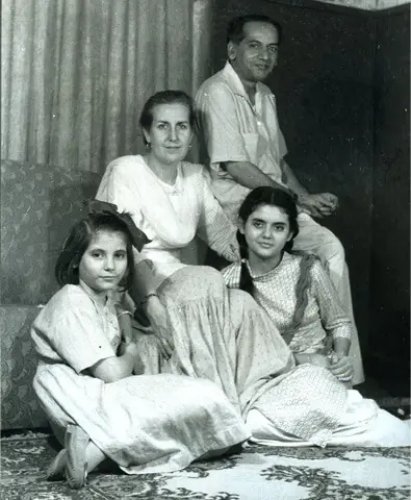 Faiz Ahmad Faiz Family - with Alyz, Salima & Moneeza - in their younger years.
Faiz Ahmad Faiz died on 20 November 1984 in Lahore at the age of 73. He was buried in Lahore.
News of his death brought grief across Pakistan, India, and the wider Urdu-speaking world.
At the time of his death, he was survived by his wife Alys Faiz and his two daughters, Salima and Moneeza. Alys Faiz passed away in 2003.
How Many Books Faiz Ahmad Faiz Published
Faiz Ahmad Faiz published roughly eight major poetry collections during and shortly after his lifetime, along with prose works, letters, essays, and translations.
His works have been reprinted many times, translated into many languages, set to music, and shared widely, so his real reach is far larger than only in Pakistan.
Faiz Ahmad Faiz's Surviving Family Members Today
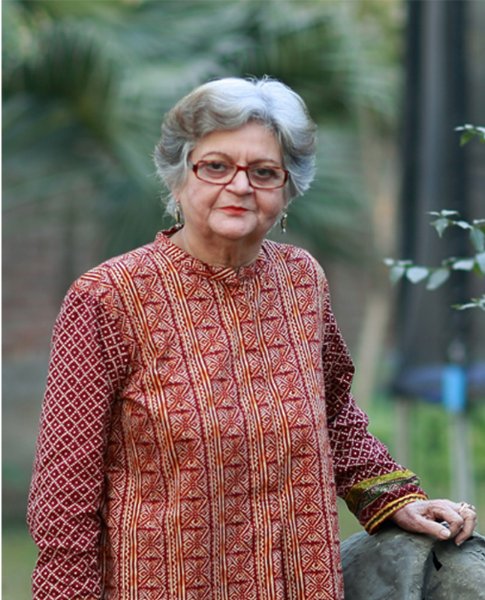 Salima Hashmi - Elder Daughter of Faiz Ahmad
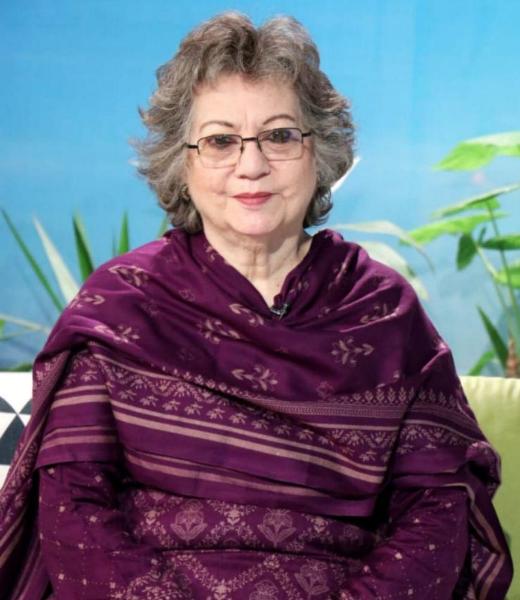 Moneeza Hashmi - Younger daughter of Faiz Ahmad Faiz
Salima Hashmi
Salima Hashmi, the elder daughter of Faiz Ahmad Faiz, is a celebrated artist and educator.
She has taught and led art education in Pakistan, including at the National College of Arts in Lahore, and she is widely respected for supporting younger artists and for speaking about her father's legacy.
Moneeza Hashmi
Moneeza Hashmi, the younger daughter, spent many years in Pakistani television and broadcasting and has been active in media and cultural work.
Grandchildren and Other Relatives
The family continues to be involved in cultural life and in preserving the poet's memory, including through the Faiz Foundation Trust and heritage efforts in Lahore.
The Legacy of Faiz Ahmad Faiz
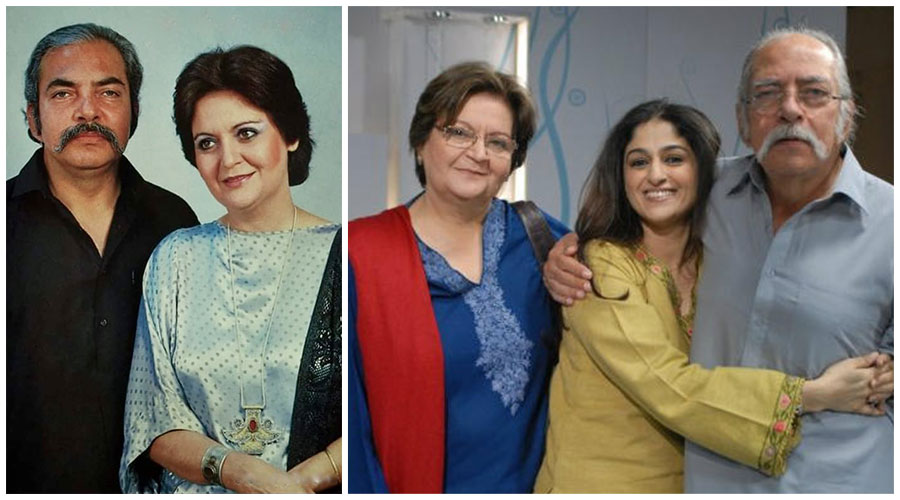 Salima & Shohaib Hashmi, & their daughter Mira Hashmi
A Voice for the Voiceless
The first part of the legacy of Faiz Ahmad Faiz is his courage. He showed that a poet could stand up to power without becoming a propagandist. His verses are about people: workers, prisoners, lovers, and dreamers.
A Bridge Between Love and Revolution
Faiz did something rare. He fused the classical language of love, with its beloved, its longing, and its candlelit nights, with the language of protest. A line about a beloved could also be about a homeland. That double meaning is why his poems feel so alive to different readers.
A Cultural Presence Across Borders
Faiz belongs to everyone in South Asia and beyond. Indians, Pakistanis, Bangladeshis, and diaspora communities all claim him.
His poems have been sung by Noor Jehan, Iqbal Bano, Mehdi Hassan, Nayyara Noor, and many others, and they continue to find new audiences in concerts, films, and online.
Lessons for Creators and Solopreneurs
There is also a lesson here for anyone building something of their own, whether it's a business, a blog, or a body of work.
Faiz Ahmad Faiz kept creating through prison, exile, and uncertainty.
He stayed true to his voice and trusted that honest work would outlast every obstacle.
That's a powerful reminder for any independent creator.
The Wrap Up: Remembering Faiz Ahmad Faiz
The story of Faiz Ahmad Faiz is the story of a man who turned pain into beauty and beauty into courage.
Born in a small Punjab village in 1911, he went on to become one of the most beloved Urdu poets of the twentieth century.
He faced imprisonment, exile, and political pressure, and he answered them all with verse.
If you haven't yet read him, start with a few poems, perhaps "Bol," "Hum Dekhenge," and "Mujh se pehli si mohabbat."
Then keep going. You'll soon see why, decades after his passing, Faiz Ahmad Faiz is still speaking to us.
Faiz Ahmad Faiz's daughter Salima Hashmi wrote an article for Dawn Newspaper in August 2026, sharing her first-hand childhood experiences, along with her family and especially during the difficult times when her father Faiz Ahmad was imprisoned.
It is worth a read. You can visit this Dawn newspaper link here.

STAFF WRITER
IdeasBeat is primarily a Book Publishing House, where we offer visually pleasing short and smart eBooks for busy people who may not have luxury of time to read long books and works. Furthermore, we offer book summaries, snippets and blog articles on diverse topics from all around the world.