French Florist Shop Revival
From a Dying Flower Shop to a Thriving Franchise

The story behind the revival of French Florist Shop is interesting and inspiring.
One entrepreneur Michael Jacobson turned a burned-out family business into 18 locations by fixing everything broken about the floral industry.
The Unexpected Call From French Florist Shop - That Started It All
In 2018, Michael Jacobson was fresh out of college when his uncle, a 40-year florist, called him up and asked for help selling the family French Florist Shop.
Jacobson said yes.
But instead of selling it, he did something bolder: he took it over.
The more he dug into the floral industry, the more he saw not a dead-end business, but a massive, fixable opportunity.
3 Broken Things That Plagued Every Local Florist
Michael Jocobson studied the market and drew his own revealing conclusions:
40% Taken by Aggregators
Platforms like 1-800-FLOWERS kept a massive cut of every sale, leaving florists with thin margins and no customer data.
Expensive Middlemen
Local shops couldn't buy directly from farms, so flowers cost more and arrived less fresh.
Outdated Tech
Most florists were running on pen, paper, and legacy software that nobody had bothered to modernize in decades.
Michael Jacobson saw all three as solvable. That changed everything.
You're Already Losing 40% — So Spend It on Yourself
Instead of handing 40% to aggregators on every order, Michael Jacobson flipped the logic: use that same budget to acquire customers directly.
The payoff?
When a customer buys from you directly, you own their data.
The second time they order, your acquisition cost drops to near zero.
That's how you break the aggregator trap.
"When someone buys directly from you, the second time they purchase, you're not paying that acquisition cost anymore." — Michael Jacobson
For French Florist Shop 95% of Customers Come From the Internet
Another study on French Florist Shop revealed some more meterics:
95%
Online-Sourced Clients
vs. the 10–40% typical for traditional florists
40%
Aggregator Cut
What platforms like 1-800-FLOWERS take from every sale
60%
French Florist Shop Royalty
What franchisees pay — far below industry aggregator rates
Heavy investment in SEO, paid ads, and website conversion rate optimization drove those numbers — without sacrificing walk-in traffic.
Client Retention Is Just As Important As Acquisition
French Florist Shop sends a personalized digital message to every first-time customer.
They worked to increase average order value to improve unit economics.
And they kept testing.
Michael Jacobson was clear that no single tactic was the magic pill.
It was the combination of small, compounding improvements across the entire customer journey that made the business explode.
The Virtuous Cycle of Direct Farm Sourcing
It took years of scale and millions in annual flower spend before farms would sell to them directly.
But once that flywheel started spinning, it became self-reinforcing: fresher flowers, lower costs, happier customers, more revenue to reinvest.
French Florist Shop - $13K in Ink → $2K in iPads
Ditch the Ink
French Florist Shop was spending $13,000/year on ink just printing orders.
They replaced it with iPads and a custom app for around $2,000.
QR Video Messages
Customers could now record a personal video message attached to their flowers via a QR code on the card — a delightful, tech-enabled touch.
Tech as a Competitive Moat
Jacobson's rule: the question isn't whether the technology is possible — it's whether you have the budget to build it.
Ask: "If Any Tech Existed, What Would I Want?"
Sometimes the most powerful tech move isn't building something revolutionary, it's replacing something absurdly wasteful.
French Florist's shift from paper-based orders to a simple digital app is a masterclass in lean operations.
The savings weren't just financial they freed up the team's creative energy to build innovations like the QR video message feature.
How Do You Avoid Becoming the Thing You Fought?
Aggregators Charge 40%
They take a massive cut, strip customer data from the local shop, and have zero control over fulfillment quality.
French Florist Shop Charges 6%
Franchisees pay a fraction of that — and orders are fulfilled by local French Florist shops with end-to-end quality control.
The answer is constant self-questioning.
Michael Jacobson openly admits the tension — and uses it as a compass to keep the model fair and founder-first.
French Florist Shop - 18 Locations and Counting
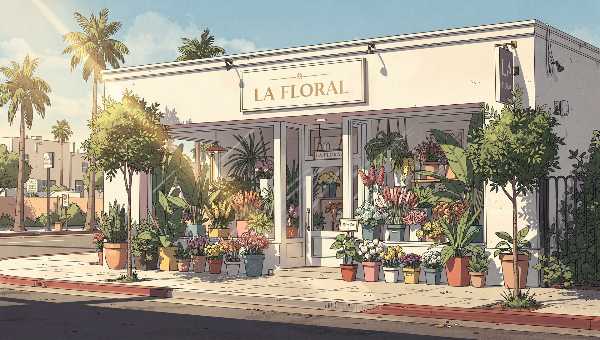
What started as a single burned-out shop in Los Angeles, USA has grown into a franchise with 18 locations.
The model works because it solves real structural problems not just for customers, but for the franchisees themselves.
Lower royalties, better supply chains, and smarter tech mean operators can actually run a profitable, sustainable flower business.
The French Florist Shop Turnaround Blueprint
Identify the Industry's Structural Flaws
Don't just improve — diagnose the root causes killing every player in your space.
Own the Customer Relationship Directly
Cut out the middleman to capture data, reduce acquisition costs, and build loyalty.
Build Scale Before Demanding Better Deals
Farm relationships, bulk pricing, and favorable terms come after you've proven volume.
Modernize Operations Relentlessly
Ask what's possible with today's tech — then find creative, affordable ways to build it.
There's No Magic Pill — Just Compounding Improvements
"It was not one magic pill that made the business explode." — Michael Jacobson
Every founder wants the one lever that changes everything.
Jacobson's story is a reminder that durable growth is a system better marketing, better retention, better sourcing, and better tech working together.
Remove any one piece, and the flywheel slows.
Stack all of them, and you have something hard to replicate.
"Life Is Beautiful" — and the Floral Industry Forgot That

Michael Jacobson's north star isn't just profits it's purpose.
His goal is to resurrect what flowers have always meant: a reminder that life is beautiful.
He believes the floral industry lost sight of that experience, buried under bad economics and broken logistics.
French Florist is his answer a brand built to deliver that feeling again, at scale, with integrity.
The Takeaway for Every Founder
The French Florist Shop case study is an interesting and inspiring story, which is not about starting a new business, rather it is about fixing a broken business and scaling it up.
Find the Broken Economics
Every industry has a 40% cut hiding somewhere. Find it.
Own Your Supply Chain
The closer you get to the source, the bigger your advantage.
Modernize Ruthlessly
Old industries are ripe for cheap, creative tech wins.
French Florist Shop proved that even the most traditional industries can be reinvented by a founder willing to question every assumption.
If this story sparked an idea, share it with someone who may be struggling to find a new business idea.
Why not also look into some loss-bearing businesses and reverse engineer it to make good profits.
You can also read this article presentation here.
Curated By IdeasBeatIdeasBeat - Web Magazine on Business & Entrepreneurship - IdeasBeat
Informative & inspiring articles on business & entrepreneurship in an easy presentable format. Short & Smart eBooks, Summaries, and Snippets are created and curated by IdeasBeat Publishing to make it easy to read, digest and apply.
These are made with the help of AI but reviewed and edited by Human Editor to add value , wherever necessary, to make it useful and consumable in a user-friendly way.
Source: Entrepreneur Magazine , Startups Summer 2026
Images: AI, Stock, & Web
You can also read this article presentation here.