Paradise Lost by John Milton - Book 1 Summary
One of the Classics Epic Poems in Literature
by John Milton
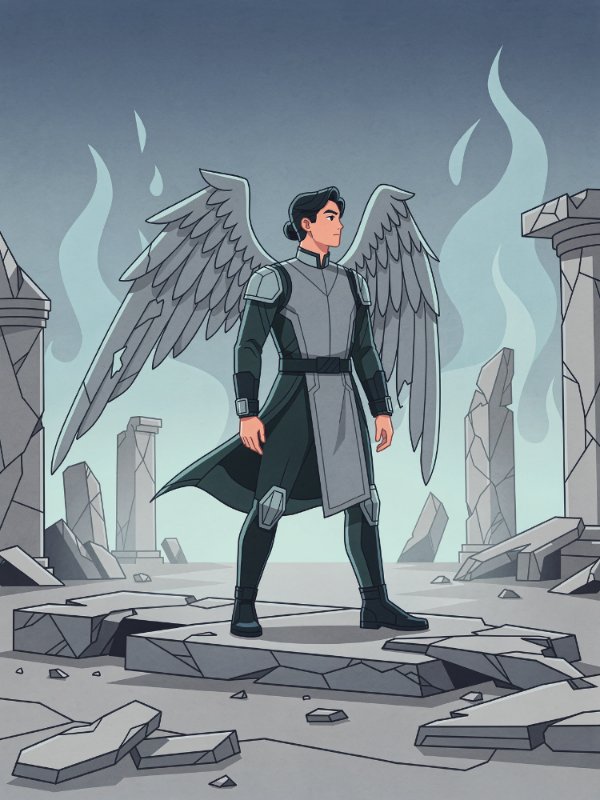
Paradise Lost by John Milton
Book 1
Read the summary of Paradise Lost by John Milton, Book 1, which is one of the classic epic poems.
It is one of the epic poems ever written on the original creation of the world and the good and evil.
Book 1 Summary - Paradise Lost by John Milton
"Paradise Lost" by John Milton is often called the greatest of English epics.
It is a huge and ambitious poem that does more than tell the story of humanity's fall.
It tries to take in the full moral history of creation, rebellion, and redemption.
Written in elevated blank verse and shaped with the scale of a classical epic, it shows Milton's wish to "justify the ways of God to men" while also giving tragic weight to the story of sin and loss.
The poem begins with an appeal to the Heavenly Muse for help in telling of humanity's first disobedience.
Milton asks for strength to handle a subject that is both sacred and terrible, and to move from blindness toward truth.
From the start, Milton presents the epic as both a spiritual search and a poetic challenge.
It reaches beyond simple storytelling into theology, philosophy, and moral vision.
The story moves through Satan's rebellion against God, the ruin of Eden, and the punishment that comes from misusing freedom.
Hell is shown as a place of darkness, fire, and despair, yet Milton's language gives it a false kind of grandeur that reflects Satan's own pride and self-deception.
Satan appears as a powerful and unsettling figure: proud, defiant, and outwardly unbroken, even though his speeches reveal his inner contradictions.
He urges his fallen army on with rhetoric, distortion, and a stubborn will to rebel.
He says they will not submit, and that if they cannot win by force, they will fight Heaven through trickery.
Even in Book I of 'Paradise Lost by John Milton, his character already shows the signs of his future ruin.
He speaks as if he were still free, but every word only reveals the chains of pride, ambition, and self-will.
Milton also introduces the council in Pandemonium, the infernal palace that mocks divine order and stands as a sign of organized rebellion.
There, the fallen angels gather in a false assembly to debate what to do next.
Their discussions show different forms of evil: open violence, cynical policy, and corrupted advice.
Figures such as Moloch, Belial, Mammon, and others speak in their own distinct voices, each showing a different response to defeat.
The list of devils gives the fallen host a mythological and historical reach, connecting them to ancient pagan identities and false worship.
Astoreth, Dagon, and the others are linked to the idols of earlier cultures.
In this way, 'Paradise Lost by John Milton' brings sacred history together with classical and biblical tradition, suggesting that pagan gods are not real divine powers, but fallen beings or mistakes of human belief.
This catalogue broadens the scale of the poem and strengthens its claim that rebellion against God echoes across all ages and civilizations.
At the same time, Book I sets out the poem's central themes with great force.
Pride is shown as the root of Satan's revolt and the motive behind the rebellion of the fallen angels, while free will is what makes both obedience and sin possible.
Providence hangs over the story as a mystery that humans and angels cannot fully understand, yet Milton insists that divine order remains just even when suffering makes it hard to see.
The contrast between light and darkness is not only physical but spiritual, marking the gap between truth and deception, understanding and blindness, life and death.
Obedience stands for harmony with God's purpose, while rebellion stands for isolation, corruption, and collapse.
Through these contrasts, Milton turns the fall of Satan and his followers into a reflection on the cost of choosing self over God.
By the end of Book I, 'Paradise Lost by John Milton' has carefully laid the ground for the rest of the epic.
The poem's world is already split between Heaven and Hell, obedience and revolt, clarity and confusion.
Still, the full meaning of those oppositions will keep unfolding as the action moves toward Eden and the fate of humankind.
However, Book I does not resolve the drama.
Instead, it opens it on a cosmic scale, joining epic spectacle with spiritual argument.
Its rich imagery, solemn language, and carefully built story prepare the reader for a poem in which every event has weight, and in which the fall of one creature becomes the key to understanding the fate of all.
Paradise Lost by John Milton
FREE Book 1 Summary
We Are Giving This FREE. Book 1 Summary - 'Paradise Lost by John Milton' For A Limited Time Only at IdeasBeat.
(The Free Offer will be removed anytime. If you can see it you can have it FREE)
FREE READ
Read the SUMMARY of 'Paradise Lost by John Milton'
Want to Read it Better. Click This Link Instead