SoHo New York
The Goto Destination in Manhattan NY
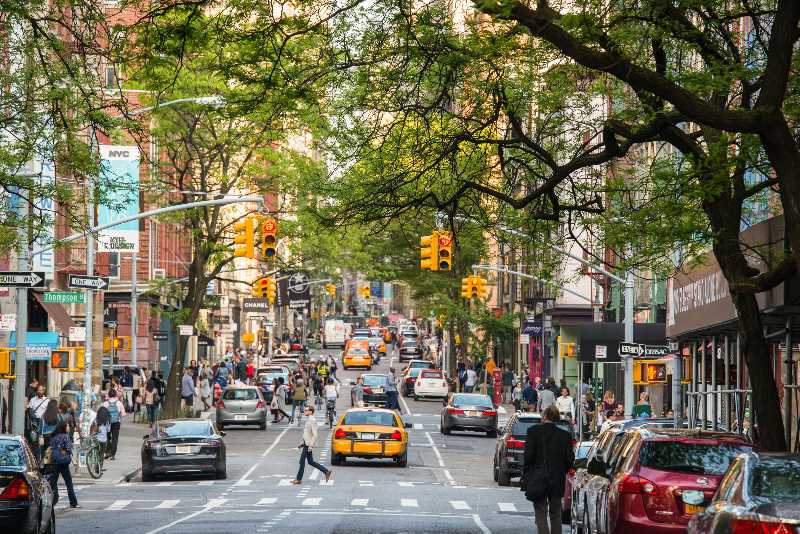 SoHo New York
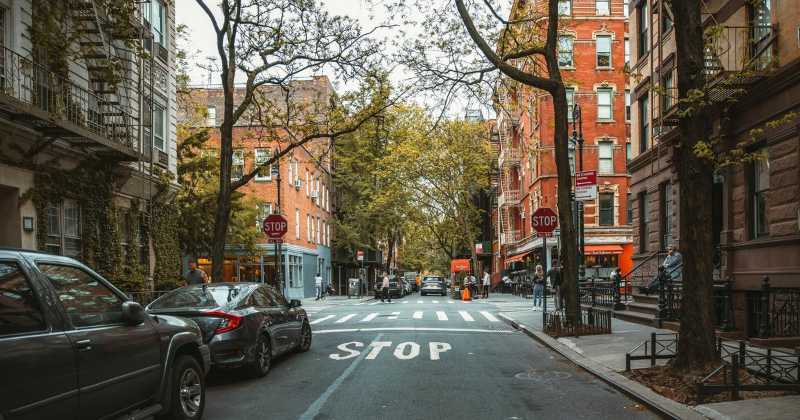
SoHo New York is one of the most popular destinations in Manhattan New York. SoHo stands for South of Houston (SoHo) Street in New York.
It provides blend of shopping, music and eateries at one place.
SoHo New York Keeps Thriving
New York's SoHo neighborhood continues to do well in business and foot traffic.
It offers most fully occupied retail spaces, whereas other shopping corridors across Manhattan fight for foot traffic and tenants.
The diversity of SoHo's retail landscape is part of what makes it work.
On any given day, shoppers might find a line forming not for a luxury boutique, but for a free sample at a cosmetics pop-up, all happening steps away from flagship stores like Prada, Chanel, and Louis Vuitton.
Mass-market retailers like American Eagle and Target coexist comfortably alongside high-end fashion houses.
CBRE's Aylin Gucalp commented "it has the broadest reach" of any retail market in the city.
"It's our largest market from a store count, and that means there's really a street for every type of brand where the brand can fit and make sense."
She points out that different streets within SoHo serve different tiers of retail mass brands cluster on Broadway, contemporary labels populate Greene Street, and luxury houses dominate Mercer Street.
The Formula Behind SoHo's Success
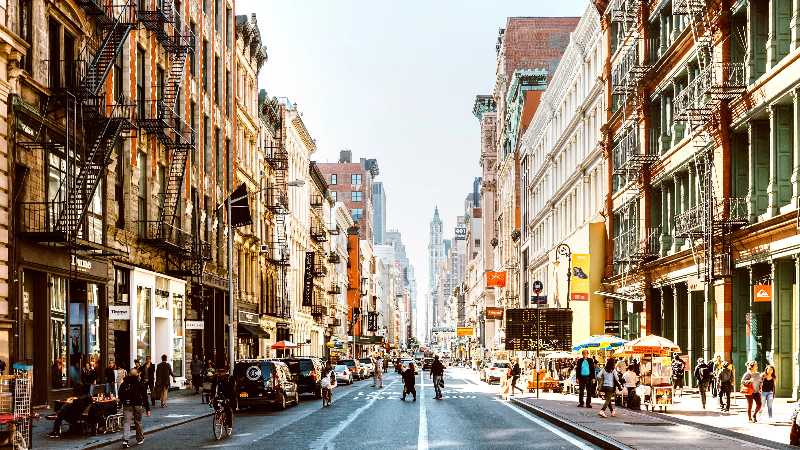
Several factors contribute to SoHo New York enduring appeal.
According to Thomaï Serdari, a marketing professor and director of NYU Stern's luxury and retail MBA program, the neighborhood's historic character plays a major role.
Its cobblestone streets and status as a historic district make it inherently walkable and charming, while a strong concentration of restaurants and bars keeps foot traffic flowing well beyond typical shopping hours.
Tourism also fuels the area's vitality.
Marie Driscoll, CEO of Driscoll Advisors, compares SoHo to "the mall of New York City, except it's not enclosed", suggesting it offers the variety of a shopping mall without the artificial, contained feel.
That authenticity is precisely what sets SoHo New York apart from more traditional retail environments, according to GlobalData's Neil Saunders.
Unlike engineered shopping centers with a single landlord orchestrating every storefront, SoHo evolved organically over decades. "What SoHo New York offers is a sense of place," Saunders said.
He noted that consumers can find the "mall experience" nearly anywhere, but SoHo's authentic character can't be replicated.
This organic quality also makes SoHo New York resilient.
Because the neighborhood isn't anchored by any single flagship tenant, unlike Herald Square's reliance on Macy's.
It can absorb closures without major disruption.
When spa chain Bliss quietly closed its last physical location in June (2025) after three decades in SoHo New York, and outdoor retailer REI shuttered its flagship store in July (2025), the neighborhood barely registered the loss.
In fact, OpenAI has already moved into office space above the former REI location, signaling continued demand for SoHo New York real estate even as retail tenants shift.
The Numbers Tell the Story
SoHo New York strength is reflected in hard data.
According to CBRE, average retail rent on Prince Street between Broadway and West Broadway hit $1,408 per square foot in the second quarter of 2026.
Only Fifth Avenue's luxury corridor between 49th and 59th Streets, home to Louis Vuitton and the struggling Saks Fifth Avenue, commanded a higher rate, at $2,540 per square foot.
Times Square, by comparison, saw average rents just below SoHo's at $1,400 per square foot.
But rent price alone doesn't tell the full story. Its availability matters just as much.
The Real Estate Board of New York's H1 2026 Manhattan Retail Report found fewer than 20 actively marketed retail spaces in SoHo and on Madison Avenue combined.
Times Square and Herald Square, meanwhile, accounted for more than a third of all available storefronts citywide.
JLL's Q2 2026 report reinforced this trend, showing SoHo hit a record-low availability rate of 8%, tying with Madison Avenue.
Williamsburg, Brooklyn's up-and-coming shopping district, posted a slightly higher rate of 10.8%.
Times Square's availability rate, by stark contrast, sat at 22.1%.
Saunders didn't mince words about why Times Square struggles: "Times Square is not doing well because, frankly, it's disgusting.
Locals don't even want to walk through Times Square because it's just a nightmare."
How SoHo New York Compares to Other Neighborhoods
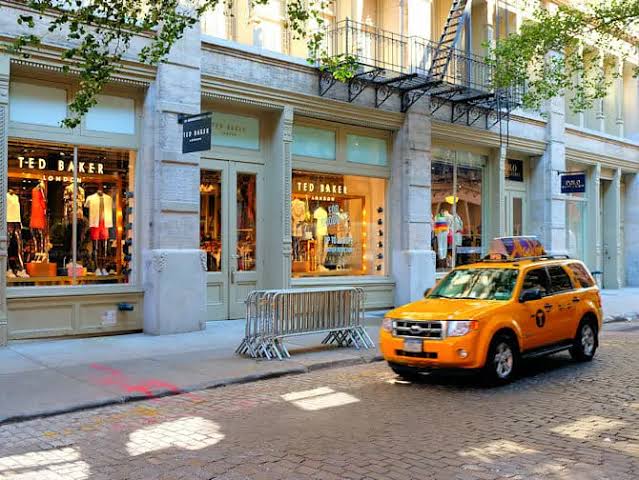
Madison Avenue serves a different but complementary purpose, catering primarily to luxury shoppers, according to Gucalp.
Many high-end brands with existing Madison Avenue or Fifth Avenue locations view SoHo New York as a natural second location, while Williamsburg is emerging as another strong option for certain customer bases.
Notably, luxury house Hermès chose Williamsburg over SoHo for its third New York City store, opening in September after closing its Wall Street location in July (2025).
The brand already operates stores on Madison Avenue and in the Meatpacking District.
Gucalp acknowledged Williamsburg's growth potential but cautioned against direct comparisons to SoHo New York.
Williamsburg benefits from a dense surrounding residential population, whereas SoHo's residential density is comparatively lower.
The ownership structures also differ significantly: SoHo's real estate is controlled by a mix of institutional investors, co-ops, and condo boards, creating an organic patchwork of retail.
Williamsburg's retail landscape, by contrast, is shaped by a smaller number of owners who curate the tenant mix more deliberately.
Saunders drew a similar contrast with Hudson Yards, calling it "artificial" and "engineered... created from scratch," while SoHo New York remains "organic, living and breathing."
SoHo New York Is More Than Just Shopping ...
Beyond pure retail transactions, SoHo New York has become essential to brand marketing strategy.
According to Adirondack Capital Partners' latest U.S. High Street Retail Capital Markets Report, SoHo is the country's "most active trophy retail market," representing 43% of all trophy retail transactions nationwide.
Driscoll noted that for many brands, having a SoHo presence is about visibility and cultural edge as much as sales.
Shoppers visit for the experience and the social media moment, posing for photos outside Polène, grabbing coffee at Buck Mason, or catching a live DJ set at Aritzia.
Saunders agreed that experience, not just brand selection, drives SoHo's appeal. "People are not just coming out necessarily to buy something. They almost want to be entertained," he said, adding that this experiential depth is difficult for other retail districts to replicate.
Ultimately, Serdari suggests SoHo's success may be rooted less in its retail lineup and more in cultural mythology. "SoHo is successful because of its own history," she said. "That icon, that imaginary space that we all carry with us in our heads... that is what makes SoHo New York work, rather than the fact that Gucci is there or Louis Vuitton is there or Prada is there."
Wrap-Up
SoHo New York has lots to teach to other international retailers and mall operators.
SoHo has been successful to create a magical blend of retail and culture, where people go for the full package that includes shopping and entertainment (music, art & eateries).
Next time, you are in New York, don't miss to visit SoHo.
This article is curated from RetailDive. You may read more about SoHo New York here.

STAFF WRITER
IdeasBeat offers Smart Marketing Ideas, Tools & Tactics for Micro, Small, & Medium Enterprises (MSMEs) with key focus on Branding & Content Marketing. We share easy-to-digest articles, ebooks and curated content from selected sources globally. At the same time, we bring insightful and inspiring stories from all around the world to make you unwind too.