Startup vs Franchise Comparison
Which Path Is Right for Your Entrepreneurial Journey?
 Startup vs Franchise Comparison
Running through a startup vs franchise comparison can help you know the benefits and challenges of each business model so that you may arrive at a well thought-through decision.
If you're standing at the crossroads of deciding whether to launch your own startup or buy into a franchise, then you better get the best of the brains.
This is one of the most common dilemmas solopreneurs and aspiring business owners face.
You've got the entrepreneurial spirit, the drive, and maybe even a little seed money — but should you build something from scratch or buy into a proven system?
This startup vs franchise comparison breaks down everything you need to know to make the smartest choice for your future.
What You Will Find in Startup Vs Franchise Comparison
You will find following subtopics in Startup vs Franchise Comparison:
- Setting Up a Startup
- The Real Cost of Starting a Startup
- How Founders Fund It
- Startup Stages
- Benefits of Launching a Startup
- Challenges of Starting a Startup
- Startups That Changed the World
- Buying A Franchise
- How Buying a Franchise Works
- The Benefits of Buying a Franchise
- The Real Challenges of Franchising
- Franchise Success Stories Worth Knowing
- Side by Side - Startup vs. Franchise Comparison
- By the Numbers - Startup vs Franchise Comparison
- Who Should Start a Startup?
- Who Should Buy a Franchise?
- Which Model Wins for Long-Term Vision?
- Your Next Way Forward
- Summarizing the Startup vs Franchise Comparison
1 - Setting Up a New Startup
What Is a Startup, Anyway?
A startup is a brand-new business built from the ground up — usually centered around an innovative idea, product, or service.
Startups aim to scale quickly, disrupt existing markets, or create entirely new ones.
Unlike a traditional small business, a startup is typically designed for rapid growth and often seeks outside investment.
The founder(s) define everything: the brand, the culture, the product, and the vision.
It's the ultimate blank canvas — exciting, risky, and full of possibility.
How to Set Up a New Startup
Every startup journey is unique, but these six milestones form the backbone of the process.
The most critical — and most overlooked — step is idea validation.
Building something nobody wants is the #1 reason startups fail.
Get that right first, and everything else becomes a lot more manageable.
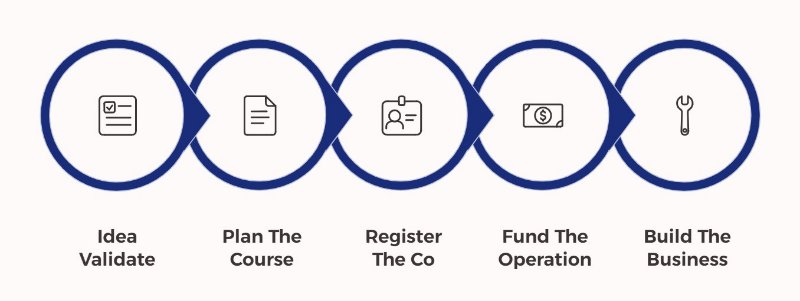 New Startup Milestones
2 - The Real Cost of Starting a Startup
Early-Stage Range of Estimated Expenses:
- Business registration & legal fees: $500–$5,000
- Website & branding: $1,000–$10,000
- Product development (MVP): $5,000–$50,000+
- Marketing & customer acquisition: $2,000–$20,000
- Office or co-working space: $300–$2,000/month
3 - How Founders Fund It
Most founders start with personal savings or "bootstrapping."
As the idea matures, they may pursue:
- Friends & family rounds
- Angel investors for early traction funding
- Venture capital (VC) for scaling
- SBA loans or grants for eligible businesses
- Crowdfunding via Kickstarter or Indiegogo
There's no single right answer — the best funding path depends on your industry, network, and growth goals.
4 - Startup Stages
Starting a business from scratch is like being handed a blank canvas.
Here's what the journey typically looks like:
1. Idea Validation – Before anything else, you need to identify a problem worth solving and confirm people will actually pay for your solution.
2. Market Research – Understanding your target audience, competitors, and industry trends is crucial.
3. Business Planning – Drafting a solid business plan that outlines your vision, financial projections, and growth strategy.
4. Securing Funding – Whether it's bootstrapping, angel investors, venture capital, or loans, you'll need capital to get moving.
5. Building Your Product/Service – Developing your MVP (Minimum Viable Product) and refining it based on feedback.
6. Legal Setup – Registering your business, sorting out licenses, and protecting your intellectual property.
7. Branding and Marketing – Creating a brand identity and getting the word out.
8. Launch and Iterate – Going live, gathering customer feedback, and continuously improving.
5 - The Benefits of Launching a Startup

Complete Creative Freedom
You define the product, brand, culture, and direction. There are no rules, no royalties, no franchisor telling you what to do.
Unlimited Upside
If you build something the market loves, the financial rewards can be life-changing. You can think in terms of equity, acquisition, or IPO.
Scalability
Startups, especially tech-based ones can scale to national or global audiences without proportional increases in cost.
You Build the Culture
Hire who you want, work how you want. Your values become the company's values from day one.
6 - Challenges of Starting a Startup
High Failure Rate
Roughly 90% of startups fail within 10 years. Most don't make it past year three. Market fit is everything, and it's incredibly hard to find.
No Guaranteed Income
Many founders go months, even years without a salary. Financial stress is real, and it can take a serious personal toll.
You Figure Everything Out Yourself
From legal to HR to marketing to operations you're learning on the fly, often making expensive mistakes along the way.
Access to Capital Is Tough
Unless you have a strong network or a truly standout concept, raising money is a grind. Most investors pass on 99% of pitches they see.
7 - Startups That Changed the World
The most inspiring part of any startup vs franchise comparison is looking at what a great startup can become. These are the companies that started with one big idea and rewrote the rules of their industries.
Apple (Founded 1976)
Started in a garage by Steve Jobs and Steve Wozniak with $1,750. Today, Apple is a $3 trillion company, the most valuable in history. It redefined personal computing, music, phones, and more.
Airbnb (Founded 2008)
Launched during the 2008 financial crisis by renting out air mattresses in a San Francisco apartment. Now valued at over $75 billion, it transformed the global hospitality industry.
Uber (Founded 2009)
A simple idea; press a button, get a ride. It turned into a $90 billion company that upended taxi industries in over 70 countries. Uber went from MVP to global giant in under a decade.
8 - Buying A Franchise

A franchise is a business model where you pay for the right to operate under an established brand's name, systems, and support.
You're essentially buying a proven playbook.
As a franchisee, you own and run the location, but the franchisor sets the standards, supplies the products or systems, and provides training.
It's a partnership: you bring the capital and hustle; they bring the brand recognition and blueprint.
You may think about McDonald's, Subway, Anytime Fitness, or The UPS Store.
9 - How Buying a Franchise Works
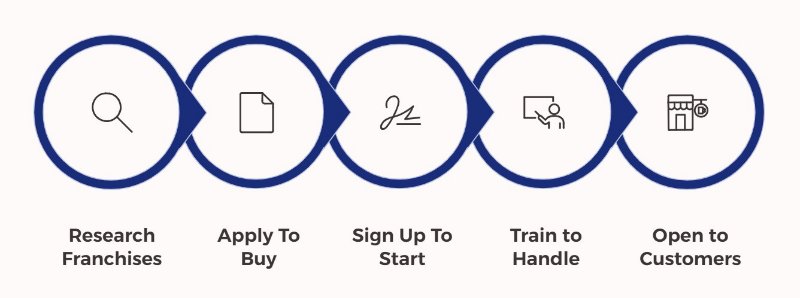 Franchise Buying Milestones
The franchise process is more structured than starting a startup which is a feature, not a bug.
You'll go through background checks, financial reviews, and thorough training before you ever open your doors.
The franchisor wants you to succeed just as much as you do; your success is their brand on the line.
10 - The Benefits of Buying a Franchise
Now let's flip the coin. In this startup vs franchise comparison, franchising offers a fundamentally different experience.
Proven Business Model
The guesswork is gone. You're operating a system that has already been tested, refined, and proven in the market.
Instant Brand Recognition
Customers already trust your brand. You don't have to spend years building awareness. It comes built-in.
Training & Ongoing Support
Franchisors provide onboarding, operational manuals, marketing tools, and ongoing support. You're in business for yourself, but not by yourself.
Easier Financing
Banks and lenders are far more willing to finance a franchise than a brand-new startup. The track record speaks for itself.
11 - The Real Challenges of Franchising
What You Give Up
- Creative control - menus, branding, and processes are locked in
- Ongoing royalties - typically 4–12% of gross sales, forever
- Territory restrictions - you can't just expand wherever you want
- Franchisor dependency - if the brand stumbles, so do you
The Financial Reality
Franchise fees are steep. Initial franchise fees alone may range from $10,000 to $100,000, and total startup costs (including equipment, leases, and inventory) can run anywhere from $100,000 to over $1 million depending on the brand.
You're not building your own brand equity, you're building theirs.
When you sell, the franchisor often has rights of first refusal on the business.
12 - Franchise Success Stories Worth Knowing
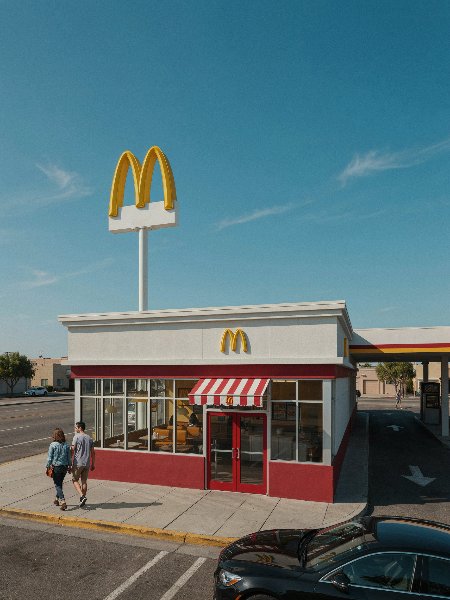
On the franchise side of this startup vs franchise comparison, many individual franchisees have built impressive wealth:
Chick-fil-A
Arguably the most profitable fast-food franchise per location in the U.S. Average annual sales per unit exceed $8.7 million — more than McDonald's, Starbucks, or Subway. The initial franchise fee is just $10,000, making it incredibly competitive to get into.
Anytime Fitness
With over 5,000 locations in 35+ countries, Anytime Fitness is one of the world's fastest-growing franchise chains. Franchisees benefit from low staffing costs, 24/7 access models, and a massive global support network.
The UPS Store
A staple of suburban strip malls everywhere, UPS Store franchisees benefit from a recession-resistant business model. Shipping, printing, and mailbox services keep demand steady year-round, making it a reliable income generator for thousands of owners.
McDonald's Franchisees
Many early franchise owners became multi-millionaires simply by owning multiple locations.
Subway Franchise Owners
Known for lower entry costs, many owners have successfully scaled to multiple units.
13 - Side by Side - Startup vs. Franchise Comparison
Overall startup vs franchise comparison side by side:
Initial Cost - Startup: Variable ($0–$1M+) | Franchise: $50K–$1M+ (structured)
Brand Recognition - Startup: Must be built from scratch | Franchise: Instant, established brand
Creative Freedom - Startup: Total freedom | Franchise: Limited by franchisor rules
Risk Level - Startup: Very high (90% fail rate) | Franchise: Moderate (20% failure rate)
Support System - Startup: You build your own | Franchise: Provided by franchisor
Profit Potential - Startup: Unlimited (equity upside) | Franchise: Capped by royalties & model
Scalability - Startup: Potentially global/viral | Franchise: Multi-unit ownership possible
When people think about a startup vs franchise comparison, they may often picture the meteoric rise of companies like:
- Airbnb – Started as an idea to rent air mattresses in a San Francisco apartment, now a global hospitality giant.
- Uber – Disrupted the entire transportation industry from a simple ride-sharing concept.
- Instagram – Built by a small team and sold to Facebook for $1 billion within just two years.
- Slack – Originally an internal tool for a gaming company, it pivoted to become a communication powerhouse.
These stories are inspiring, but remember, for every Airbnb, there are thousands of startups that didn't make it. So read the exceptions and outliers carefully. Don't just get carried away. Do your homework thoroughly.
14 - By the Numbers - Startup vs Franchise Comparison
The data tells a compelling story in any startup vs franchise comparison.
Comparison of two models (Startups vs Franchise)
90% - Startup Failure Rate. Within the first 10 years of operation
20% - Franchise Failure Rate - A significantly lower risk profile for new business owners
USD 500 B - Franchise Industry Size - Annual economic output of franchising in the U.S. alone
3 X - Franchise Industry Size - Annual economic output of franchising in the U.S. alone
15 - Who Should Start a Startup?

A startup is your best bet if you have a genuinely original idea that solves a real problem, and you have the stomach for uncertainty.
It's the right path if you're motivated by building something entirely your own, you're comfortable with financial risk, and you're willing to work years before seeing a meaningful return.
Startups are especially powerful in tech, SaaS, health, and consumer product spaces where innovation creates defensible advantages.
If your vision is bigger than any existing brand, build your own.
Best For
Innovators, tech founders, and visionaries who want full ownership of their idea and are willing to embrace high risk for high reward.
16 - Who Should Buy a Franchise?
A franchise is ideal if you want to own a business without inventing one.
It suits operators, people who are excellent at executing systems, managing teams, and delivering consistent customer experiences.
If you have capital to invest but don't have a breakthrough idea, franchising gives you a structured, lower-risk path to business ownership.
It's also a smart fit for professionals transitioning out of corporate careers who want ownership with training wheels.
The Key Question
Are you energized by running a great operation, or by building something from nothing?
Best For
Operators, career changers, and investors who want business ownership with a proven system, lower risk, and built-in support.
17 - Which Model Wins for Long-Term Vision?
Startup: The Long-Term Winner for Impact
If your goal is to build lasting wealth, create something meaningful, and potentially change an entire industry, for this a startup is unmatched.
The long-term upside of owning equity in a business you built from scratch is extraordinary.
But you must be prepared for years of sacrifice, uncertainty, and hard pivots before it pays off.
The ceiling is infinite; the floor is also zero.
Franchise: The Long-Term Winner for Stability
If your goal is reliable income, predictable growth, and a business you can eventually sell or pass on — franchising delivers.
Multi-unit franchise owners who reinvest profits and expand their portfolio can build significant, durable wealth over 10–20 years.
It's not as glamorous as a unicorn startup, but for most people, it's a far more realistic path to financial freedom.
The Bottom Line
There's no universally "better" model — there's only the right model for you, based on your goals, risk tolerance, capital, and personality.
18 - Your Next Way Forward
The most important takeaway from this startup vs franchise comparison is this:
Both models have produced extraordinary success stories — and both have produced costly failures.
The difference between those outcomes almost always comes down to self-awareness, preparation, and execution.
If You're Leaning Towards A Startup
Validate your idea with real customers before spending a dollar. Talk to 50 potential users first. Build the smallest version that proves the concept works.
If You're Leaning Towards A Franchise
Research the Franchise Disclosure Document (FDD) thoroughly. Talk to existing franchisees, not just the ones the franchisor recommends. Know your numbers cold.
For Everyone
Work with a mentor, accountant, and attorney before signing anything. The best business decision you'll ever make is an informed one.
19 - Summarizing the Startup vs Franchise Comparison
Here's the honest truth: there's no one-size-fits-all answer in this startup vs franchise comparison.
It genuinely depends on your personality, risk appetite, and long-term goals.
If you're someone who thrives on innovation, doesn't mind uncertainty, and dreams of building something entirely your own with potentially unlimited upside, a 'startup' might be your calling.
Think Airbnb or Uber, if your idea is strong enough and you execute well, then the sky's the limit.
However, if you value stability, want a proven roadmap, and prefer to focus on operational excellence rather than reinventing the wheel, a 'franchise' could be your smarter bet.
You're essentially buying reduced risk and a support system, which often leads to steadier, faster returns.
For those focused purely on long-term wealth building with lower risk, franchises often win out due to their proven track records and support systems.
But for those chasing a legacy-defining vision and willing to embrace higher risk for potentially exponential rewards, starting your own venture is the way to go.
Ultimately, this startup vs franchise comparison boils down to one key question:
Do you want to build the map, or follow one that's already been drawn?
Only you can answer that based on your resources, risk tolerance, and entrepreneurial spirit.
You can also read another somewhat similar article presentation here

STAFF WRITER
IdeasBeat offers Smart Marketing Ideas, Tools & Tactics for Micro, Small, & Medium Enterprises (MSMEs) with key focus on Branding & Content Marketing. We share easy-to-digest articles, ebooks and curated content from selected sources globally. At the same time, we bring insightful and inspiring stories from all around the world to make you unwind too.
Read More Articles on Entrepreneurship